
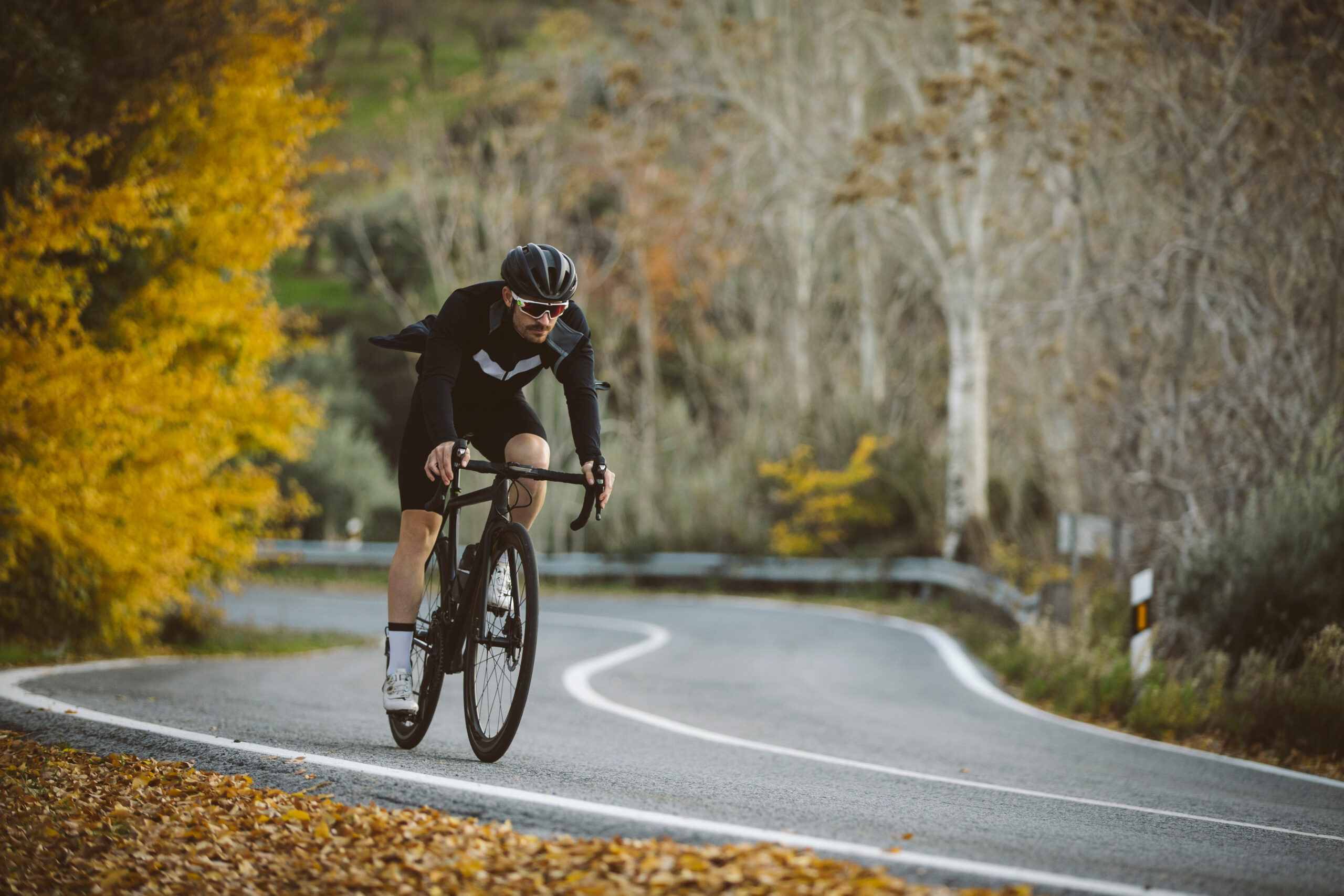
Cycling comes with its own language, and it can be confusing if you’re new to it. This A to Z glossary explains common cycling and biking terms in clear, everyday language – from bike types and components to riding techniques and trail terms. It’s useful for anyone who wants to better understand their bike.
A-Z Glossary
A
Aero position
A low, streamlined riding position that reduces wind resistance. Common in road racing and time trials.
Alarm lock
A bike lock with a built‑in alarm that sounds if the bike is moved or tampered with.
B
Bikepacking
Long‑distance cycling using bags fixed directly to the bike, rather than racks and panniers.
Bottom bracket
The bearing and axle assembly that allows the crank arms to rotate.
Brifters
Brake and gear shifters combined into one control, commonly found on drop‑handlebar road bikes.
c
Cadence
The speed at which you pedal, measured in revolutions per minute (RPM).
Carbon frame
A lightweight bike frame made from carbon fibre. Popular on performance road and mountain bikes.
Cassette
The cluster of gears attached to the rear wheel hub.
Cleats
cleats are small plastic or metal plates attached to the bottom of specialized cycling shoes that lock into compatible ‘clipless’ pedals.
D
Derailleur
The mechanism that moves the chain between gears.
Disc brakes
Brakes that use a metal disc and calliper. They offer strong, reliable stopping power, especially in wet conditions.
Drafting
Riding closely behind another cyclist to reduce wind resistance.
E
E‑bike
A bicycle with an electric motor that assists pedalling up to a legal speed limit.
Endurance geometry
A more upright road bike frame design aimed at comfort over long distances.
F
Fixie (fixed‑gear bike)
A bike with no freewheel, meaning the pedals move whenever the bike is moving.
Flat pedals
Pedals that do not clip into cycling shoes. Popular for casual riding and mountain biking.
G
Gravel bike
A versatile drop‑handlebar bike designed for roads, tracks and light off‑road riding.
Groupset
The collection of drivetrain components such as shifters, derailleurs, chain and brakes.
H
Hardtail
A mountain bike with front suspension only.
Helmet retention system
The adjustable mechanism at the back of a helmet that helps achieve a secure fit.
I
Inner tube
The inflatable tube inside a tyre that holds air (unless the tyre is tubeless).
Isopropyl alcohol
Commonly used to clean disc brake rotors and drivetrain components.
J
Jump (trail feature)
A raised section of trail designed to lift the bike briefly off the ground.
K
Kickstand
A fold‑down support that keeps a bike upright when not in use.
Kingpin (mountain biking)
A suspension pivot point used in some rear suspension designs.
L
Lane positioning
Where a cyclist chooses to ride within a road lane to stay visible and safe.
Low gearing
Gears that make pedalling easier, especially useful for hills.
M
Mountain bike (MTB)
A bike designed for off‑road riding, with wide tyres and suspension.
Mudguards
Attachments that reduce spray from wheels, useful for commuting and wet conditions.
N
Narrow-wide chainring
A chainring design that helps prevent the chain from coming off on rough terrain.
O
Overgearing
Using a gear that is too hard for the terrain, making pedalling inefficient.
P
Panniers
Bags that attach to racks for carrying items on a bike.
Q
Quick release
A lever system that allows wheels or seatposts to be removed without tools.
R
Road bike
A lightweight bike designed for tarmac and longer distances.
Rolling resistance
The friction between tyres and the ground that affects speed and effort.
S
Singletrack
A narrow trail designed for one rider at a time, common in mountain biking.
Singletrack
Clip‑in pedals commonly used for mountain biking and commuting.
T
Tubeless tyres
Tyres that seal directly to the rim without an inner tube, reducing puncture risk.
Trail etiquette
Unwritten rules about sharing paths safely with other cyclists, walkers and horses.
U
U-lock
A rigid, U‑shaped lock known for strong security.
V
Valve types
Common types include Presta (thin, used on most road bikes) and Schrader (similar to car valves).
W
Wheelset
The pair of front and rear wheels together as a system.
Wide tyres
Tyres that provide extra comfort and grip, increasingly common on modern bikes.
X
X‑country (cross‑country)
A style of mountain biking focused on speed and endurance rather than jumps.
Y
Yaw angle
The angle of side wind hitting a rider or bike, often discussed in aerodynamics.
z
Zone training
Cycling training based on heart rate or power output zones.
FAQs
Yes. Gravel bikes are versatile and comfortable for roads, cycle paths and light off‑road use.
Cadence is how fast you pedal, while gears control how hard each pedal stroke feels.
No. Many riders are efficient on flat pedals, especially for commuting and casual cycling.